The falls carry a good amount of water only when there is a rain on the
hills, so it is advisable to see the weather forecast, when one plans to
come to Courtallam . Season begins from June of every year till
September. The South West Monsoon brings in the cold breeze with mild
temperature. From October to December North East Monsoon sets over in
Tamil Nadu and the climate is cold and the rains are very heavy
sometimes. Sometimes the falls get flooded and people are not allowed to
take bath during floods.Courtallam or Kutralam, Spa of South India, is a panchayat town situated at a mean elevation of 160 m on the Western Ghats in Tirunelveli District of Tamil Nadu, India. Many seasonal and few perennial rivers such as the Chittar River, the Manimuthar River, the Pachaiyar River and the Tambaraparani River
originate in this region. The numerous waterfalls and cascades along
with the ubiquitous health resorts in the area have earned it the title
the Spa of South India. Courtallam is not just waterfalls; its temples too attract visitors. The
most important among these is the Chitra Sabha, one of the five sabhas
with Nataraja, Shiva in the dancing posture as the main deity. The
paintings at the Chitra Sabha were renovated about 100 years ago. The
others are the Rathna Sabha at Thiruvalangadu, the Kanaka Sabha at
Chidambaram, and the Velli Sabha at Madurai and the Thamira Sabha at
Tirunelveli. The temple at the foot of the hill is conch-shaped which
has special significance in Hindu tradition
Showing posts with label tourism. Show all posts
Showing posts with label tourism. Show all posts
Monday, 12 August 2013

Monday, 1 July 2013
Marudhamalai murugan temple details
THIRU MUGURUGATRUPADI, a noted work of the Tamil Literature of the Sangam Age.The word Muruga is a comprehensive term, connoting several meanings such as sweetness, youthfulness, beauty, divinity and honey and therefore it is but natural for the Lord to have His abode amidst scenic beauty among hills and mountains. Situated at a height of about 500 feet in a plateau on the western Ghats, fifteen kilometres north west of Coimbatore, amidst lush vegetation and salubrious climate, Marudhamalai Hills, dedicated to Lord Muruga Dhandayudhapani is classified under one of the six main abodes of the God, the others being THIRUVAVINANKUDI PALANI, THIRUPARANGUNRAM, NEAR MADURAI, THIRUCHEERALAVAI Thiruchendur, THIRUVERAGAM Swamimalai and PAZHAMUDHIRSOLAI Azhagarkoil near Madurai. Set against the backdrop of hazy blue hills dotted with shrubs and bushes of varied hues, the sacred shrine verily reflects the picture of Lord Muruga, magnificently mounted on his vehicle peacock, flaunting and swaying its feathers and plume in full bloom. The origin of the temple is rooted in legendary antiquity and dates back to the age of Surapadama, the demon destroyed by Lord Subramanya referred to in SKANDAPURNAM. The inscriptions found in Thirumuruganathaswami Temple, Thirumurganpoondi places the origin of the temple in the 12th century A.D.According to Perurpuranam, Soorapadama, the scourge of the gods aided by his mighty brothers, Singamukha and Tharaka arrayed against them and struck terror in their already agitated minds by his sudden and surprising charges and depredations. Unable to bear the agony and anguish, the gods approached Lord Siva and sought His succour. Lord Siva comforted the Gods that Lord Muruga would come to their rescue, root out and destroy Surapadama and his retinue enmasse. The gods should hasten to the Marudhamalai Hills and await the advent of Lord Muruga, their Saviour! Perupuranam also alludes to a king called Kusathvajan, who, it is said, was blessed with a male issue, only after worshipping Marudhamalai Muruga.The Divine Cow Kamadhenu is reported to have grazed in the pastures of the hills of Marudhamalai.Perurpuranam lists the three neighbouring hills, vellingiri, Nili and Marudhamalai as the very manifestations of Lord Siva, Parvathi and Subramanya respectively and the three hills taken together as the very symbol of Somaskanda.
Sunday, 23 June 2013
Dindigul ayyanar falls
 The Ayyanar Falls, situated on the route to Thirumalaikeni from
Dindigul, is surrounded by various small temples and can be reached by
foot from the Siluvathur Road. dindigul to manakadur road manakadur near 4kms hills places.
The Ayyanar Falls, situated on the route to Thirumalaikeni from
Dindigul, is surrounded by various small temples and can be reached by
foot from the Siluvathur Road. dindigul to manakadur road manakadur near 4kms hills places.

Dindigul thirumalaikeni murgan temple details.

The temple is open from 6.00 a.m. to 1.00 p.m. and 2.00 p.m. to 6.00 p.m.
address:
Shri Subramaniaswamy Temple, Thirumalaikeni - 624 306, Sengurichi Post, Dindigual district.
contact number : +91-451 - 205 0260, 96268 21366
Saturday, 22 June 2013
Nagercoil famous details
Nagercoil is the 11th largest city in the southernmost Indian state of Tamil Nadu and a municipality and administrative headquarters of Kanyakumari District Some of the widely celebrated festivals here are Pongal,which is celebrated for three days, Onam is another Festival widely celebrated among the Malayalam speaking population by drawing the `atha poo' flower decoration in the floor,Suchindrum "Ther Festival", Ayya Vaikunda Avataram, Deepavali, Easter, Christmas, New Year, St. Francis Xavier's feast, Bhagavathy Amman Temple festival, Ramzan and Bakrid eul alha.Krishnancoil,
situated on the way to Trivandrum at NH-47 is named after the temple
where the presiding deity is Lord Kishna in his childhood avatar. This
temple is 1.5 km from the heart of Nagercoil town.


Friday, 21 June 2013
Pollachi beautifull location

Wednesday, 19 June 2013
thoothukudi temples detail
Sri Subrahmanya Swami Devasthanam, Tiruchendur.
Alwarthirunagari is one of the most well known festivals of Sri Vaishnavam.
Arulmigu Mutharamman Temple, Kulasekaranpattanam.
Sri Sanakara Rameswarar temple,
Sri Vaikundapathy Temple
Nava Thirupathy,Srivaikundam Tamiraparani.
Sinthalakarai temple,
kootampuli santhana muthu mariyamman temple
Alwarthirunagari is one of the most well known festivals of Sri Vaishnavam.
Arulmigu Mutharamman Temple, Kulasekaranpattanam.
Sri Sanakara Rameswarar temple,
Sri Vaikundapathy Temple
Nava Thirupathy,Srivaikundam Tamiraparani.
Sinthalakarai temple,
kootampuli santhana muthu mariyamman temple
Monday, 17 June 2013
Theni distric details & famous places
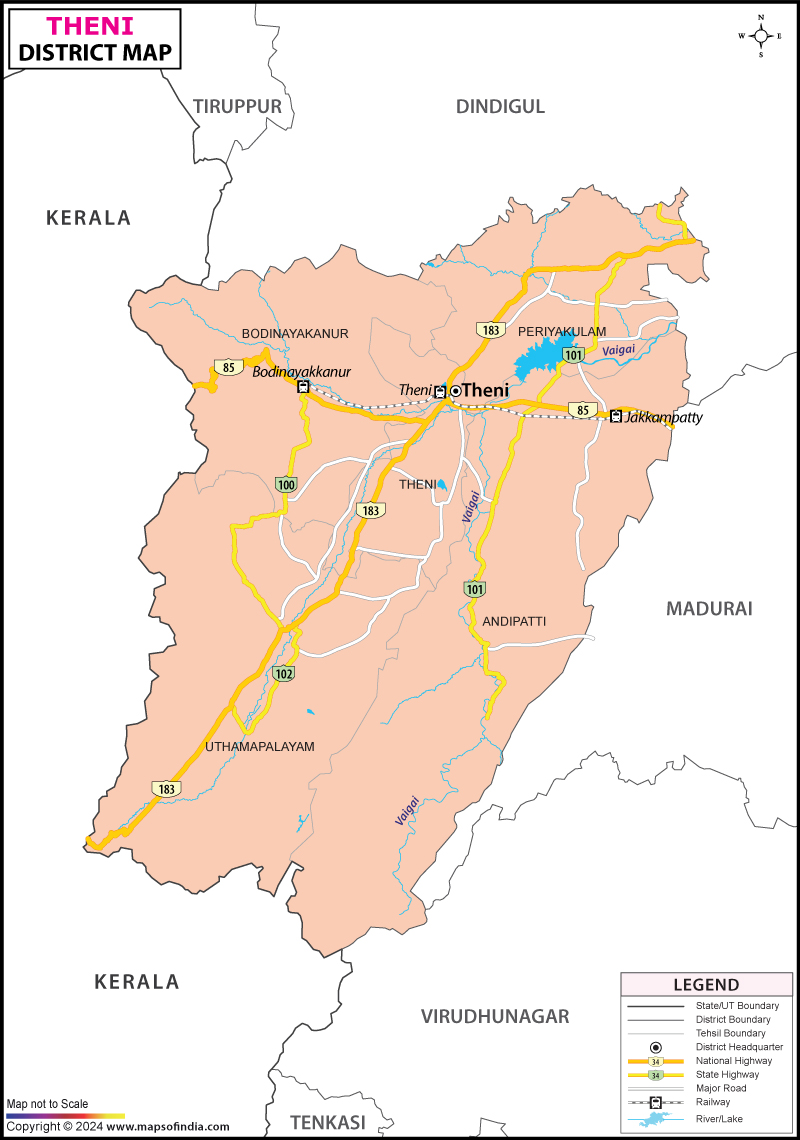
Gowmariamman Temple at Veerapandi Village (Theni Taluk) and saneeswara Bahavan Temple at Kuchanur Village (Uthamapalayam Taluk) are important and famous Hindu temples of this area. Kannagi temple which witnesses a single day festivity during Chitra Pournami day is in the interstate border.
Sunday, 16 June 2013
Thirumalai Nayak Palace with details for all

About 1.5 Kms from
the Meenakshi temple, this palace was built in 1636 by the ruler whose
name it bears. The imposing edifice is famous for the “Stuccowork”
on its domes and impressive arches. The Sorgavilasam (Celestial Pavilion),
measuring 75m x 52m, constructed entirely of brick and mortar without
the support of a single rafter or girder, is a marvel of indo-Saracenic
architectural style. Among other striking features of the palace are the
massive white pillars, several of which line the corridor that runs along
the courtyard. Connected by high decorated arches, these pillars measure
20m in height and have a circumference of 4m. Elsewhere, there are polished
black stone pillars of varying heights. It was King Thirumalai Nayak’s
grandson who demolished much of the fine structure and removed most of
the jewels and woodcarvings in order to build his own palace in
Tiruchirapalli.
Thanks to Lord Napier, the then Governor of
Madras, who partially restored the palace in 1866-72, and the subsequent
restoration works carried out several years ago, today, we get to see
the Entrance Gate, The Main Hall and the Dance Hall. There’s daily
sound and light show in English at 1845 hrs and in Tamil at 2015 hrs.
This half an hour show extols the virtues of King Thirumalai, particularly
his passion for arts, his victories in battle and his love for his subjects.
Tickets for the show:
Adults Rs.10/-- Children Rs.5/-


About Madurai city details for you.

Madurai
has a rich historical background in the sense that Lord Shiva
himself performed sixty-four wonders called "Thiruvilaiyadals".
The Cholas ruled Madurai from 920 AD till the beginning of the
13th century. In 1223 AD Pandyas regained their kingdom and
once again become prosperous. Pandian Kings patronised Tamil
language in a great way. During their period, many master-pieces
were created. "Silapathikaram", the great epic in
Tamil was written based on the story of Kannagi who burnt Madurai
as a result of the injustice caused to her husband Kovalan.
In April 1311, Malik Kafur, the general of Alauddin Khilji who
was then the ruler of Delhi, reached Madurai and raided and
robbed the city for precious stones, jewels, and other rare
treasures. This led to the subsequent raids by other Muslim
Sultans. In 1323, the Pandya kingdom including Madurai became
a province of the Delhi empire, under the Tughlaks.The 1371, the Vijayanagar dynasty of Hampi captured Madurai
and Madurai became part of the Vijayanagar empire. Kings of
this dynasty were in habit of leaving the captured land to governors
called Nayaks. This was done for the efficient management of
their empire. The Nayaks paid fixed amount annually to the Vijayanagar
empire. After the death of Krishna Deva Raya (King of Vijayanagar
empire) in 1530 AD, the Nayaks became independent and ruled
the territories under their control. Among Nayaks, Thirumalai
Nayak (1623-1659) was very popular, even now he is popular among
people, since, it was he who contributed to the creation of
many magnificent structures in and around Madurai. The Raja
Gopuram of the Meenakshi Amman Temple, The Pudu Mandapam and
The Thirumalai Nayakar's Palace are living monuments to his
artistic fervor.Madurai started slipping into the hands of the British's East
India Company. In 1781, British appointed their representatives
to look after Madurai. George Procter was the first collector
of Madurai.
Now after
India's independence, Madurai is one of the major districts
of Tamilnadu State. In 1984, the Vast Madurai district was bifurcated
into two districts namely Madurai and Dindugul Districts. Subsequently
in 1997, Madurai district was bifurcated into two districts
namely Madurai and Theni Districts. In Madurai District, there
are 10 State Assembly constituencies and two parliament constituencies.
Madurai is surrounded by several mountains. The Madurai city has 3 hills as its city boundary. Yanaimalai, Nagamalai, Pasumalai named after Elephant, Snake and Cow respectively. It is famous for Jasmine Flowers. Jasmine flowers are transported to other cities of India from Madurai.
Madurai is surrounded by several mountains. The Madurai city has 3 hills as its city boundary. Yanaimalai, Nagamalai, Pasumalai named after Elephant, Snake and Cow respectively. It is famous for Jasmine Flowers. Jasmine flowers are transported to other cities of India from Madurai.
Saturday, 15 June 2013
Dindigul kottai mariamman temple details

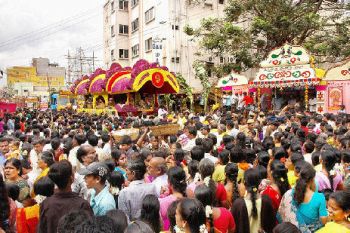
Dindigul kotaimariamman temple place in dindigul .The town wears a rapturous glow in the month of Masi (February / March) and it is the festive season in Sri Kottai Mariamman Temple. It is more than 200 years old. The Mariamman idol is said to be installed by the army of Tippu Sultan at the fort and so the temple is known as Kottai Mariamman Temple. The temple is crowded on Friday. Other deities include Vetri Vinayagar, Lord Muruga, Madurai Veeran, Kaali, Dhurga, karuppusamy and Navagraha.Sri Kottai Mariamman Kovil is more than 200 years old. The temple is built in a square shape. The idol of this temple is said to be installed by the soldiers of Tippu Sultan at the foot of the mountain. The temple got its name Kottai(Fort) Mariamman temple because of this. There are temples for Vetri Vinayaka at the South and Lord Muruga at the North of this temple.
There is a Mandapam Hall at the centre of where there is a sculpture of a Lion facing the Sannidhi. The deity Moolavar is seen here, embedded deeply under the floor in the sanctum Sanctorum. Various incarnations of the Goddess Mariamman are depicted on the sniper structure over the Sanctum Sanctorum.
A temple for Vinayaka is on the eastern side over the Amman Sannidhi and on western side, a temple for Madurai Veeran is also seen. On the front side, idols of Navagrahas can be seen. Idols of Kaalhi and Dhurga are on the back side of the temple. The golden shield will adorn the deity on every day between 5 PM to 9 PM. The temple is located in a two acre campus and is managed by a board of Trustees.
Temple History:
During the 18th century, there was only a small peeta and the idol of the deity. The army men of Tippu Sultan built a small mutt and installed the idol, which today is the Kottai Mariamman and guardian deity of the people of Dindigul. There are three special entrances to the temple. The processions are arranged through the front entrance. Other entrances are close to the Fort. The temple celebrates a 20 day festival each year.
Festival
Soon after the new moon day in the month of Masi, (February-March), on the fifth day, the festival flag would be hoisted for a 20 day celebration in the temple. The festival continues for 30 days.With the hoisting of temple flag that has a beautifully-sketched portrait of the Goddess Mariamman, the 20-day Masi festival commenced at Sri Kottai Mariamman Temple here on Tuesday.At the outset, special pujas were performed to the main deity and to the holy flag.Flag broughtPriests tied green sedge grass in the middle of the 'dwajasthambam (flag post)' and covered it with new white dhotis. After special pujas, the yellow colour holy flag was brought from the sanctum sanctorum to inner 'prakaram.'Later, the chief priest performed the eye-opening ceremony (drawing eyes on the portrait of Goddess Mariamman drawn on the flag).With music from percussion instruments, and chanting of holy hymns rending the air, the chief priest of the temple hoisted the flag on the flag post as large numbers of devotees witnessed the proceedings.A group of devotees from nearby villages carried 'palakombu' (holy pole) and installed it before the 'dwajasthambam.'Thousands of devotees poured water on the 'palakombu' and took part in the special pujas performed to the main deity.Holy car procession will take place on February 7, fire walk festival on February 22 and 'Dasavatharam' on February 23. The festival will conclude on February 26 with 'Theppa utsav.'
Kodaikanal famous places & hotels details!!!
Information on Kodaikanal

Kodaikanal is one of the very popular and most sought after Honeymoon and holiday destination hill resorts in South India. This hill station stands 7200 feet above sea level and situated in upper palani hills of the westernghats near Madurai in Tamil Nadu. Kodaikanal is also popularly known as the princes of Hill Stations. The cool and misty weather, the scenic beauty of the rolling hills and the wooded forest of Kodaikanal and its surroundings will mesmerize any visitor throughout the year. Walk through the wooded forests, row in the lake, bath in one of the splashing waterfalls, go for horse riding and cycling around the lake or simply admire the views.
Palani idumban temple details
Edumban Temple Details
Palani, Kavadi and IdumbanHow Murugan, Idubam and Kavadi came to Palani. Sage Agastya wanted to take two hills -- Sivagiri and Saktigiri -- to his abode in the South and commissioned his asuran disciple Idumban to carry them. Idumban was one of the very few asuran survivors of the suraasuran war between Murugan's forces and those of Surapadman. After surviving the war he had repented and became a devotee of Lord Murugan.Ganapati employs cunning to cheat Murugan Idumban finds the kavadi is too heavy at Palani At this stage, Subrahmanya or Muruga had just been outwitted by His brother Ganesa in a contest for going around the world and He was still smarting over the matter. Ganapati had won the prized fruit (the Jnana-pazham) by simply going around His parents. Long after this, Subrahmanya came seating on His peacock to find that the prize had already been given away. In anger, He vowed to leave His home and family and came down to Tiru Avinankudi at the Adivaaram (meaning 'foot of the Sivagiri Hill'). Siva pacified Him by saying that Subrahmanya Himself was the fruit (pazham) of all wisdom and knowledge. Hence the place was called Pazham-nee ('You are the fruit') or Palani. Later He withdrew to the hill and settled there as a recluse in peace and solitude.
Idumban bore the hills slung across his shoulders in the form of a kavadi, one on each side. When he reached Palani and felt fatigued, he placed the kavadi down to take rest. ced the kavadi down to take rest.
Palani, the timeless centre of Murugan devotion When Idumban resumed his journey, he found that he could not lift the hill. Muruga had made it impossible for Idumban to carry it. Upon the hilltop the great asuran spotted a little boy wearing only kaupeenam and demanded that he vacate at once so Idumban could proceed with his task. The boy, who was yet in a fighting mood, refused. In the fierce battle which ensued, Idumban was slain but was later restored to life.
Palani Murugan Temple Details for all.
Dindigul distric palani murgan temple
world famous god
Palani Hill Temple
world famous god
Lord Murugan is the deity of the Tamil Land. Palani (Tiru Avinankudi) is the third Padai Veedu. The temple at Palani is an ancient one, situated at an elevation of 1500 feet above sea level. It is a charming campus from where one can take a look at the Idumban Hill, the Kodaikanal Hills, the Western Ghats, the greenery of the paddy fields, rivers, tanks, Palani town and the colleges. On a lovely, clear and mist-free day, the Kurinji Andavar Temple is visible from here against the bright Sun. In daytime, Palani is Hill Beautiful; at night, it is Hill Resplendent.The deity of Palani is known as Dandayudhapani Swami, the Lord having the Staff in his Hand. The deity at the sanctum sanctorum is made out of an amalgam of nine minerals popularly called Navapashanam.
Dindigul city famous palace
Dindigul city famous places:

1, malaikottai
2, palani
3, kodaikanal
4, kottai mariyamman ( dindigul )
5, abirami amman temple
6, thirumalai keni
7, ayyanar palces
8, koparanar temple ( how famous temple )
9, vandikarupa kovil ( ayyalur )

1, malaikottai
2, palani
3, kodaikanal
4, kottai mariyamman ( dindigul )
5, abirami amman temple
6, thirumalai keni
7, ayyanar palces
8, koparanar temple ( how famous temple )
9, vandikarupa kovil ( ayyalur )
Subscribe to:
Posts (Atom)